Monday, August 13, 2007

Expat Perspective: Chris in Freiburg - "One of the Most Stunning Places on Earth"

Welcome to the latest instalment of Expat Perspective, a series of posts by guest writers who come from X but are living long term in Y. Here's the second post from Chris Mavergames, an American librarian who's recently settled into family life in Southern Germany.

Basically, for this edition of Expat Perspective, I'll let the images speak for themselves. I'm originally from Georgia, USA which is a beautiful place in its own right and now live in southern Germany in the heart of the Black Forest, Freiburg. It truly is one of the most stunning places on earth and is also a culturally diverse and lively place with excellent food and drink.

Click here for a short video of the mountain area behind our house and views overlooking the city:

For more information, freiburg.de.

Wednesday, August 01, 2007

Havana, Cuba: "Cocktail Culture"

Cocktail Culture
by John Hardcastle © 2007


Havana smells like shit, piss, garbage, and rotting fruit … and leaded petrol … and sun baked earth … and rum and cigars … and, thankfully, like fresh breezes rolling in from the sea. It’s a city where you’re rarely more than arm’s length away from a phenomenal cocktail … or a bongo player … or a half-baked street hustle (I’ve never seen British pounds. What do they look like?). Upon first contact, Havana is both repulsive and alluring, with its more appealing features eventually winning out, for the most part anyway.


Boys of all ages play impromptu games of baseball in neighbourhood streets. Old men in Parque Central argue the outcomes of national league games. Antique Chevies and Oldsmobiles – some in pristine condition, others about to collapse – share the road with Ladas. Buzzards soar and circle high-rise hotels of a bygone era.


Ubiquitous images of pop icon Che Guevara, ‘the prototype of the new man,’ are as inescapable as CCTV cameras in London. His shaming eyes gaze beyond their furrowed brow as a moral warning to any citizen foolish enough to contemplate a counterrevolutionary thought. In support of Che’s vision, a multitude of murals insist "Fatherland or Death!" and "Eternal Glory to the Martyrs." Other slogans, such as the prevalent "We are winning!" are so ridiculously out of place amid the urban decay and poverty that you wonder if you’ve stumbled upon the boldest use of irony ever. After a while, all Havana starts to appear as a socialist art project set against the backdrop of a dilapidating mid-century modern playground.


At no time is this notion of crumbling-city-as-backdrop-for-party-line-art more evident than on May Day. Well before dawn, the buses roll in and endless streams of people take to the streets for the Plaza de la Revolutión. For even the most hardened free market capitalist, the sight is awe-inspiring. There’s no glitz. No glamour. Just people. Thousands upon thousands of people on parade. They carry handmade posters and massive banners proclaiming the virtues of the revolution and the vices of imperialism. They get their kids involved too. Little toe-heads with gleaming smiles enthusiastically tote cardboard signs reading "Bush is an assassin" or "Death to Verdugo".


This sort of public display of politics seems very grassroots and genuine until later when a local, desperate for an outsider’s ear, explains that "people have been harbouring so much vengeance for so many years that when things change, the streets will be filled with blood." According to this disgruntled Habañero, "The worst crimes in Cuba are to be comfortable and to own nice things."


By 9:30 the May Day parade is over. Good thing too because it’s already brutally hot with little shade to be found. Their slogan signboards discarded or carried at the side, the masses gather round the handful of ice cream and shaved ice vendors at the plaza.


Elsewhere in Havana, namely tourist-laden Habana Vieja, the vibe couldn’t be more different. Unlike the Plaza de la Revolutión, no scratchy recording of L'Internationale blares from loud speakers. Rather, small bands of trovadores make their rounds among the many bars and restaurants, playing their hearts out for tips from mojito-guzzling tourists. That this day is a Socialist holiday is not apparent. Cash is king. Any foreigner unwilling to part with a little here and there for the sake of social lubrication is an unwelcome guest deserving admonishment.


Of course, for ridiculously little money, tourists are personally serenaded by musicians whose talent and experience are more suitable for, say, Carnegie Hall than any hotel lobby bar or street corner: a live smell-the-sweat and feel-the-breath performance of a song costs less than the price of a track on iTunes. Ballads about black tears, rebel heroes, and unrequited love - accompanied by horses clopping on cobblestones and 50 year-old Buicks with blown out mufflers - for less than the price of a download.


Drinks are equally splendid and cheap. With respect to cocktails, Cuba has an absolute advantage: miles of sugar cane for sugar and rum, plenty of Caribbean sunshine for lemons and limes. That same sunshine makes sipping a cool drink in the shade almost mandatory. Perhaps this need for relief in the form of a cold alcoholic beverage explains why two of the world’s most celebrated cocktails, the mojito and the daiquiri, are Cuban creations.

These days, the mojito rules. And it’s easy to see why … and simply to order another. The right mix of mint, rum, sugar, lime, and fizzy water is a hard act to follow. However, resisting the urge to stick with the mojito and trying something else from a menu of coctales nationales does not disappoint. To think that the tastiest daiquiri in the world is just down the street from the tastiest piña colada is mind boggling, especially after sampling so many commendable runners-up. Less well known, but just as brilliant, mixes - such as the Mary Pickford and El Presidente - reward the willing imbiber with subtle flavour and ample kick.


A good buzz helps you to deal with Havana’s incongruities and to ponder all the inevitable what-ifs and whens that occur to anyone spending any amount of time here. Havana is a movie set city that shouldn’t be: too poor and desperate to be so wonderful and engaging, too dynamic and animated to be so sad.


All photography courtesty of John Hardcastle © 2007

Tuesday, July 24, 2007

London to Mongolia ... in an ice cream truck!

Rum, raisin and rotten roads
To drive from London to Mongolia takes some doing. To try it in this ice cream van, stopping to serve cones to passers-by and border guards along the way, is one step beyond.
BBC News
Last Updated: Tuesday, 24 July 2007, 12:24 GMT 13:24 UK

Backpacking just isn't for me. Everyone goes backpacking, or so it seems, I want a proper old-fashioned adventure and to do something nobody has ever done before. And so we are pushing back the boundaries of ice cream vending.

Click
here for complete article.

Saturday, July 14, 2007

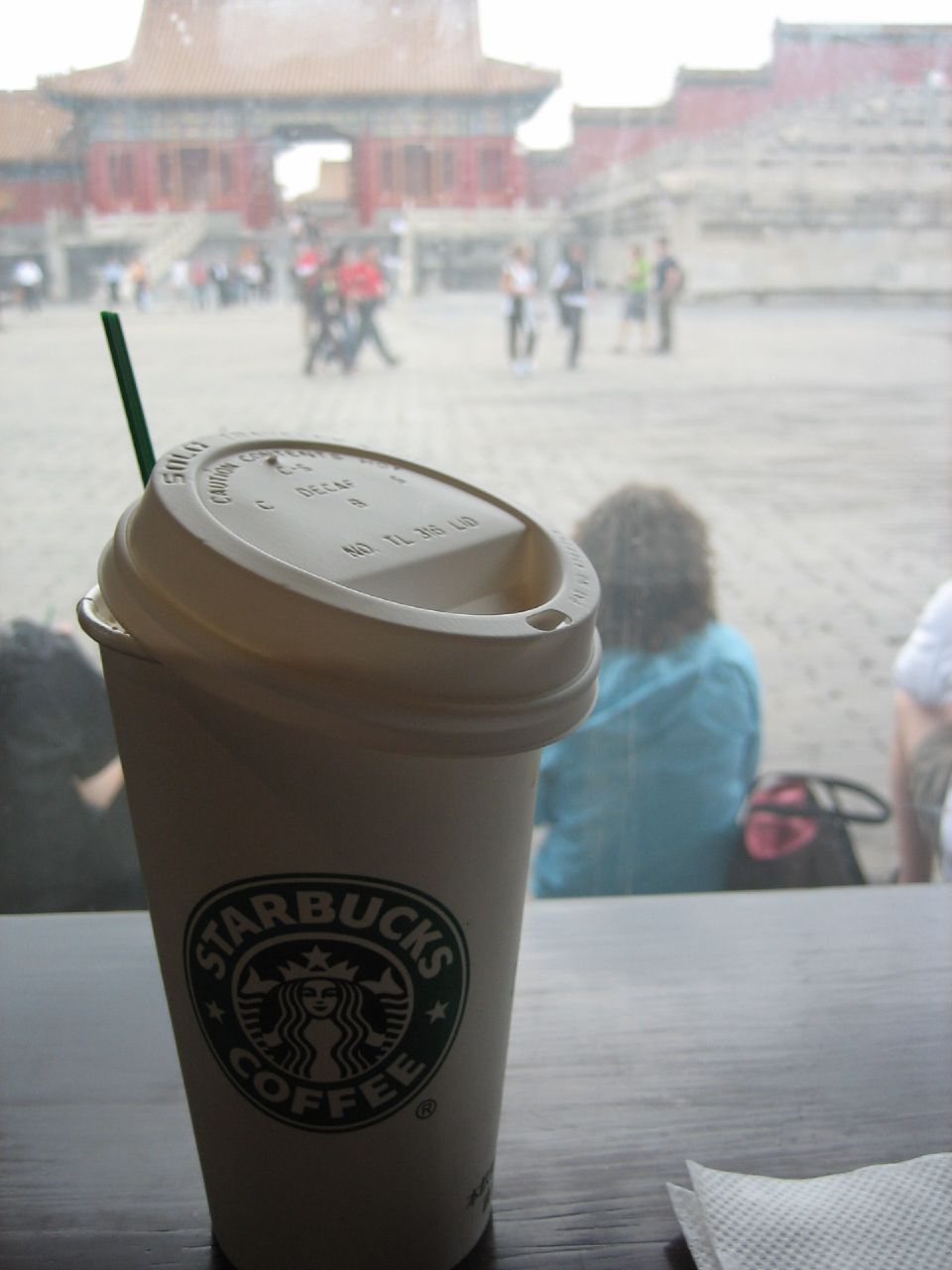
No More Starbucks in Forbidden City

Forbidden City Starbucks closes
A Starbucks coffee shop operating on the historic site of Beijing's Forbidden City has closed down after huge protests.
BBC News
Last Updated: Saturday, 14 July 2007, 06:26 GMT 07:26 UK

An online campaign arguing that the shop was trampling on Chinese culture had drawn more than 500,000 signatures.

Click
here for complete article.

-------------------------------

Photography courtesy of ellesil's photostream on Flickr

Thursday, July 12, 2007

Report from Pamplona's Running of the Bulls

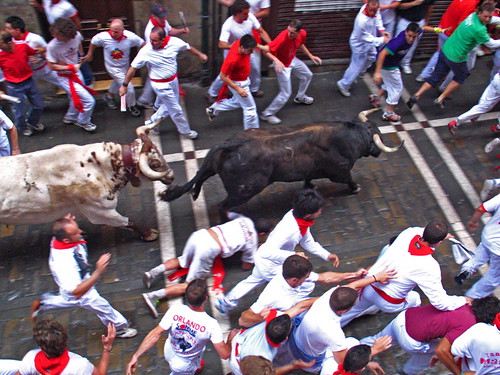
Running of the Bulls Begins in Spain
PAMPLONA, Spain — Six massive fighting bulls specially bred for fearlessness charged down the narrow, slippery, people-clogged streets of
Pamplona on Saturday during the first bull run of the San Fermin Festival.
Associated Press
FoxNews.com
Saturday, July 07, 2007


One Australian man was gored slightly and one Spaniard was lucky to emerge with only a minor shoulder injury after having been tossed in the air by one of the bulls before falling into the path of another whose horns missed. Both were evacuated by ambulance.

Click
here for complete article.

Seven gored at Pamplona bull run
Seven people have been gored by bulls during the sixth day of this year's annual bull-running festival in the northern Spanish town of Pamplona.
BBC News
Last Updated: Thursday, 12 July 2007, 12:10 GMT 13:10 UK

Local authorities said three people were in a serious condition and had undergone operations in hospital.

Click here for complete article.


Photography courtesy of inthesitymad's photostream
on Flickr

Thursday, July 05, 2007

South Pacific Island Nation Vanuatu: Happiest Place in the World

The following article and relevant clip from the BBC report on recent findings that the South Pacific nation of Vanuatu is the Happiest country on earth. I can't help but think about two of my favorite books: Paul Theroux's Happy Isles of Oceania and Michener's Tales of the South Pacific, especially Tales' mythical isle of Bali Hai.

Photograph courtesy of Graham Crumb's Flickr stream

What's so great about living in Vanuatu?
The Pacific island nation of Vanuatu is the happiest place on earth, according to a new "happy planet index". Beside the palm trees and beaches, why is life so good there?
By Denise Winterman
BBC News Magazine
Last Updated: Thursday, 13 July 2006, 12:02 GMT 13:02 UK

The archipelago of 83 islands in the western Pacific is the happiest place on the planet, according to a new "happy planet index" published by the New Economics Foundation (NEF). The UK languishes in 108th place, below Libya, Iran, and Palestine.

Click here for complete article.

------------------------------------------

Vanuatu is happiest country
BBC News Player
July 4, 2007

The Vanuatu islands are underdeveloped but the happiest country on earth due to strong traditions.

Click
here to view the clip.

Provence: Tiled Roof


Tiled Roof
Photography by
Tiki Chris © 2007
Interested in contributing travel photography to this blog? Click
here for details.

Wednesday, July 04, 2007

Provence: Chain


Chain
Photography by
Tiki Chris © 2007
Interested in contributing travel photography to this blog? Click
here for details.

Tuesday, July 03, 2007

Provence: Salernes


Salernes
Photography by
Tiki Chris © 2007
Interested in contributing travel photography to this blog? Click
here for details.

Monday, July 02, 2007

Provence: Entrecasteaux


Entrecasteaux
Photography by
Tiki Chris © 2007
Interested in contributing travel photography to this blog? Click
here for details.

Sunday, July 01, 2007

Provence: Cotignac


Cotignac
Photography by
Tiki Chris © 2007
Interested in contributing travel photography to this blog? Click
here for details.

Saturday, June 30, 2007

Provence: Prior


Prior
Photography by
Tiki Chris © 2007
Interested in contributing travel photography to this blog? Click
here for details.

Friday, June 29, 2007

Provence: Espadrilles


Espadrilles
Photography by
Tiki Chris © 2007
Interested in contributing travel photography to this blog? Click
here for details.

Thursday, June 28, 2007

New UNESCO World Heritage sites

Unesco names World Heritage sites
The Sydney Opera House in Australia and the Red Fort in India have been added to a list of the world's most valuable cultural treasures.
BBC News
Last Updated: Thursday, 28 June 2007, 10:26 GMT 11:26 UK

There are currently more than 830 sites on the World Heritage list, from Afghanistan to Zimbabwe, which has been updated regularly since 1972.

Click
here for complete article.

Provence: Untitled


Untitled

Photography by
Tiki Chris © 2007
Interested in contributing travel photography to this blog? Click here for details.

Wednesday, June 27, 2007

Provence: entrez libres


entrez libres
Photography by
Tiki Chris © 2007
Interested in contributing travel photography to this blog? Click
here for details.

Tuesday, June 26, 2007

Expat Perspective: Chris in Freiburg - Summer Night in Oslo

Welcome to the latest instalment of Expat Perspective, a new series of posts by guest writers who come from X but are living long term in Y. Here's the second post from Chris Mavergames, an American librarian who's recently settled into family life in Southern Germany.

Recently, I had to attend a work meeting in Oslo, Norway. As I live in the south of Germany, I wasn't prepared for the summer sun to burn quite so bright. It was my first experience with a Scandinavian night and being less than a week before the summer solstice (longest day of the year), it was incredible. The sun burns bright well past 9pm and it remains daylight until around midnight where it just dips into dusk/dawn and resurfaces around 2. By 5am, it looks like noon would in most of western Europe or America (I'm originally from Georgia).

Oslo is fairly small for a capital (approximately 500,000 people) and very walkable, if not inexpensive (roughly 10 Euros for a pint in some places!). There are some museums you're not likely to find anywhere else, such as the Nobel Peace Centre, Thor Heyerdahl museum and Viking Museum. The food is excellent (though, again, very pricey). And, generally, the city is quiet and pleasant and it's nice to simply (and easier on the wallet) to have a walk around. I was, however, happy to be back in the Black Forest in southern Germany if not only to see my wife and 5-month old but also to get some sleep, as that midnight sun can be detrimental to one's sleeping cycle. I'd recommend having a few beers to get to sleep when it's so bright out in Oslo - that is, if you can afford it!


11:30 p.m. in Oslo, from my hotel window
Photography by Chris Mavergames © 2007
Interested in contributing travel photography to this blog? Click here for details.

Provence: Mulberry Tree


Mulberry Tree
Photography by
Tiki Chris © 2007
Interested in contributing travel photography to this blog? Click
here for details.

Japanese/French lead initiative to develop new supersonic Concorde-like jet

France, Japan eye 'new Concorde'
Japanese and French companies have signed an agreement to develop a supersonic aircraft to succeed the disused Concorde jetliner, according to Japanese media reports.
CNN
Friday, June 17, 2005 Posted: 0947 GMT (1747 HKT)

Under the deal, the various parties will conduct research into composite materials, technology for reducing engine noise and other difficulties unique to supersonic flight.

Click
here for complete article.

Monday, June 25, 2007

Provence: Spring in Provence


Spring in Provence
Photography by
Tiki Chris © 2007
Interested in contributing travel photography to this blog? Click
here for details.